
Reviewed · FOOD & DRINK
Pula Food Walking Tour
Food, wine, and Roman Pula at dusk. I like this tour because it mixes Pula Arena with food and wine in a way that actually helps you understand the city, not just check boxes. The guide, including Denis, brings clear context and even practical stay tips, which is a big win when you only have a day or two. One thing to consider is pacing, because one guest felt the flow was less organized than they wanted.
You start at Istarska ul. 40 at 7:00 pm and do a short string of iconic landmarks before settling into restaurants for tastings. I like that the group is small, capped at 12, so it feels human, not like a cafeteria line with costumes.
Since the tour runs on foot and depends on weather, it works best if you’re good with a few outdoor stops and you’re flexible about how the meal sequence lands. If you want a perfectly timed minute-by-minute schedule, you might want to keep that in mind.
In This Review
- Key things I’d clock before you go
- Pula Food Walking Tour at a glance, and why this length works
- Finding the group quickly at Istarska ul. 40, and what to expect after 7 pm
- Roman sights you’ll actually remember: Arena to the Gate of Hercules
- Stop 1: Pula Arena (outside view)
- Stop 2: The Twin Gates of Pula
- Stop 3: Titov Park
- Stop 4: Tempio Di Augusto
- Stop 5: Danteov trg
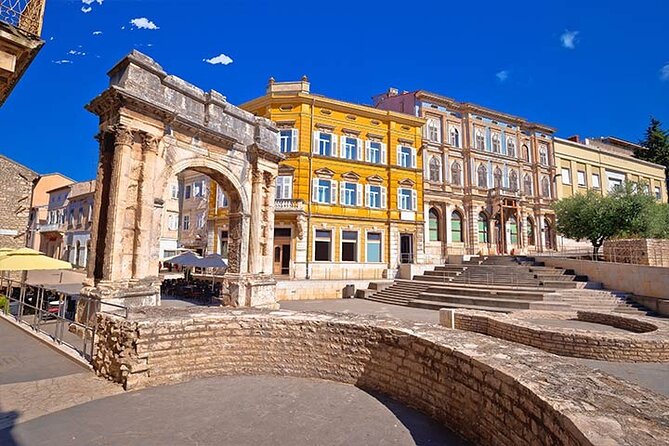
- Stop 6: Arch of the Sergii
- Stop 7: Gate of Hercules
- Eating like a local in real stops: tastings, olive oil, aperitive, and wine
- How to pace yourself with wine
- Denis, friendly guides, and the practical tips that make it worth it
- Price and logistics: what $94.93 really buys
- The main drawback to watch: pacing and one restaurant stop
- Who should book this Pula food walking tour?
- Should you book? My quick decision guide
- FAQ
- What time does the Pula Food Walking Tour start?
- How long is the tour?
- Where do we meet for the tour?
- What is included in the food and drinks?
- Is the tour in English?
- How big is the group?
- Can I cancel for a refund?
Key things I’d clock before you go
- A small group max (12) means easier questions and better attention from the guide
- 5 food tastings plus olive oil plus 3 wine glasses plus a local aperitive, so you’re not guessing if it’s enough
- You get Roman landmarks outside only, then shift to restaurants for the eating part
- English tour with a professional licensed guide, including history and practical tips
- 7:00 pm start pairs the evening buzz with dinner pacing
Pula Food Walking Tour at a glance, and why this length works
This is a 3 hours 30 minutes food walking tour in Pula, Croatia, priced at $94.93 per person. You meet at Istarska ul. 40 at 7:00 pm, and it ends back at the same meeting point. It is offered in English, using a mobile ticket, and the tour size is limited to a maximum of 12 people.
I like the timing because a 7 pm start usually hits that sweet spot: the city cools down, the squares start to feel alive, and you’re ready to eat without feeling like you spent your whole day waiting for dinner. It also keeps the Roman sights in a more human lighting, rather than the harsh midday glare.
Is it “just dinner”? No. The walking portion is built to give you a setting for what you’re about to taste. You get a quick route through major Roman-era points, then the tour becomes a proper meal experience with multiple stops.
Finding the group quickly at Istarska ul. 40, and what to expect after 7 pm
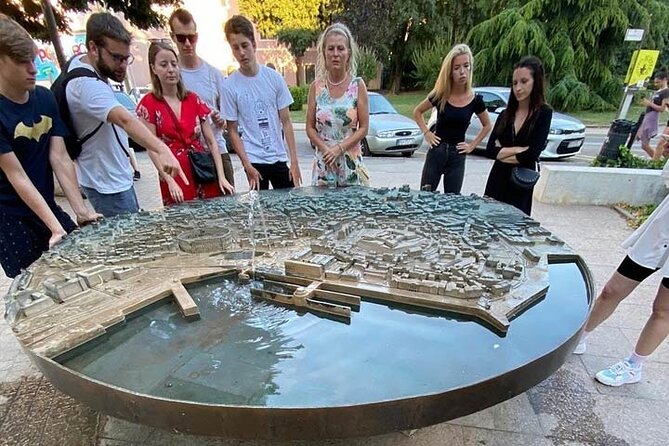
Your meeting point is specific: Istarska ul. 40, 52100 Pula, Croatia. That matters because the tour is small, and you want to start on time, especially since the itinerary flows into restaurants.
The tour is designed for people who can do a moderate walk and handle standing for short periods while the guide points things out. The format is part street walk, part restaurant time. Most of your calories and drinks happen after the landmarks, so plan to arrive hungry but not starving.
One practical perk I appreciate: the meeting point is described as near public transportation. So if you’re coming in from somewhere else in Istria, you are not stuck figuring out a complicated last mile.
Finally, the tour is weather-dependent. Since you’re outdoors for several landmark stops, you want a plan for rain. If the weather doesn’t cooperate, you should expect an alternate date or a full refund.
More Walking Tours in Pula
- Pula: Historic Walking Tour with Local Guide & City Views★ 4.8 · 214 reviews
- Pula walking tour★ 5.0 · 96 reviews
- Pula: Historic Sites Guided Walking Tour★ 4.8 · 78 reviews
Roman sights you’ll actually remember: Arena to the Gate of Hercules
The best thing about this tour’s sight section is that it stays focused. You are not wandering for hours. You’re hitting a sequence of recognizable Roman landmarks, each with a short, useful explanation that helps you picture how Pula worked in Roman times and how that shows up today.
Stop 1: Pula Arena (outside view)
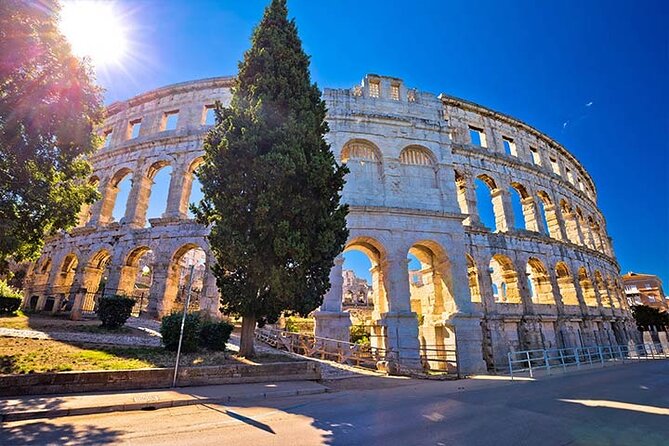
Pula Arena is the anchor monument. Built in the 1st century AD, it hosted gladiator games and is believed to have held around 20,000 spectators. Even though you see it from outside, it’s still the kind of scale that clicks instantly in your mind. It’s hard to forget a building that big.
What I like here is the quick framing: you learn what it was for, so when you later spot other Roman remains around town, you start noticing patterns.
Stop 2: The Twin Gates of Pula
The Twin Gates feel like a gateway to the city’s layers. Once an imposing entrance, they now form arches above the path leading toward the Archaeological museum and the castle.
This stop is short, but it helps you orient fast. If you like understanding where your walking route is taking you, these gates do the job.
More Croatian courses by the sea:
- Istria: Guided Tour of Inner Istria with Food Tasting
★ 5.0 · 67 reviews - Olive Oil Guided Tasting and History in Pula
★ 4.5 · 34 reviews - Pula Food Walking Tour
★ 4.5 · 22 reviews - Istrian hill top cities tour with truffle and olive oil tasting
★ 5.0 · 18 reviews
Stop 3: Titov Park
Titov Park is a contrast point. Established in the 1950s, it used to be a major city intersection. Today, it’s known as a youth meeting spot in the evening.
I enjoy this because it stops the tour from being only Roman. You’re seeing how Pula’s street life evolved, and that makes the dining part feel like it belongs to today, not only the past.
Stop 4: Tempio Di Augusto
This square is just below the central hill and still functions as the city’s main square. In Roman times, it was the center of civic life, and today it remains an administrative and legislative center.
When a place still does its original job after centuries, it’s more meaningful than a pile of stones. You can stand there and feel how public life has kept moving through the same space.
Stop 5: Danteov trg
Danteov trg gets its fame from the Italian poet Dante Alighieri. This stop is brief, but it adds a cultural layer beyond the Roman storyline, which helps if you want Pula to feel like a living place, not a museum route.
Stop 6: Arch of the Sergii
The Arch of the Sergii was erected in the 1st century by the Sergi family. It uses Corinthian style and today the gates and the square play a role in local culture, including theatrical and musical performances.
If you like cities that reuse their old structures for modern life, this one is a nice bridge between eras. It also helps if you’re planning to catch a performance while you’re in town, since you’ll recognize the location later.
Stop 7: Gate of Hercules
The Gate of Hercules, built in Roman times, sits between two medieval towers. This is where Romans entered the city, and the tour ends soon after this point.
It’s a satisfying finish to the sightseeing section because you end on a threshold idea, the feeling of entering a place. From there, it makes sense to shift from walking and looking to eating and relaxing.
Eating like a local in real stops: tastings, olive oil, aperitive, and wine
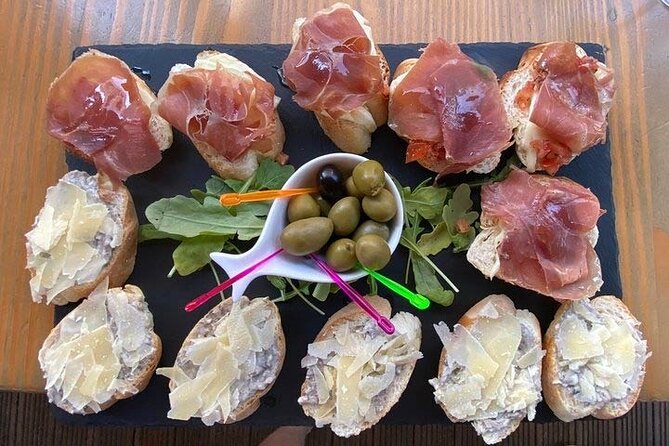
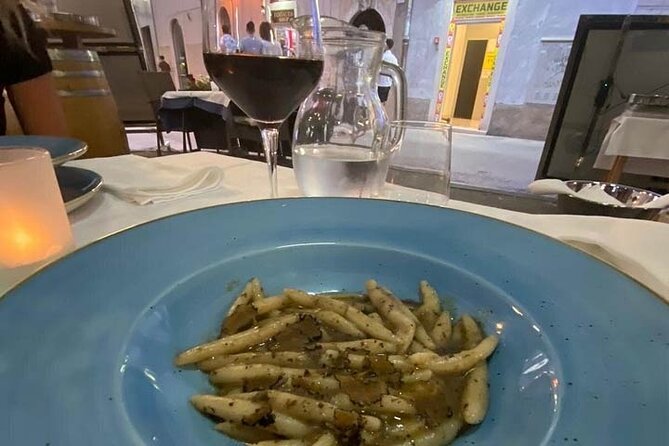
After the last gates, the tour turns into the main event. The format is that you spend the rest of the experience in restaurants for food tasting, and the included amount is described as a full dinner of food.
Here’s what you get, and why it’s a strong value setup for an evening tour:
- 5 food tastings
- olive oil tasting
- 1 local aperitive
- 3 glasses of wine
That combination matters because it is not only about quantity. The olive oil tasting and aperitive give you flavors that are tied to local habits, not just generic tourist bites. Then the wine and tastings round it out into a meal you can actually feel satisfied by.
How to pace yourself with wine
Three glasses plus wine can be a lot if you’re also drinking water slowly while walking. My practical advice: sip and space it out. Drink a little, eat something, then keep moving between tastings. It helps you enjoy the flavors instead of speeding past them.
Also, bring your appetite. Since it’s a full dinner experience, you should not plan a heavy late-night snack right after, unless you know you can handle it.
Denis, friendly guides, and the practical tips that make it worth it
This tour earns strong marks because the guiding style is more than facts on a map. One guest highlighted Denis as friendly and informative, and another pointed out that the guide shared tips for the rest of their stay, including help with parking and other sightseeing pointers across Pula and the wider region.
That kind of guidance is a big deal on a short trip. It turns a tour from an event you attend into something that improves your next day too.
A licensed professional guide also helps with the flow. You’re watching the same route landmarks as everyone else, but you’re getting context that makes the architecture and squares make sense. The tour also stays in English, so you can follow the explanations instead of guessing.
Price and logistics: what $94.93 really buys
At $94.93 per person, this isn’t the cheapest way to eat in Pula. But it also isn’t a basic walking snack tour. You’re paying for:
- multiple food tastings
- olive oil tasting
- 3 wine glasses plus a local aperitive
- a licensed guide
- a guided route that includes major Roman landmarks
For a 3.5-hour evening, that’s the kind of package that can save time. Instead of researching which places do local tastings well, you get a structured path and the drinks built in.
Booked 35 days in advance on average, it’s popular enough that you should not wait until the last minute if your dates are fixed.
The main drawback to watch: pacing and one restaurant stop
The strongest positive pattern is clear: people like the overall food and wine and the guide’s ability to explain Pula. The weaker point is pacing. One guest felt the tour pace seemed disorganized and poorly controlled. Another person said one of the restaurant stops was disappointing from a food point of view, even if the rest of the tour was enjoyable.
So here’s the practical takeaway for you:
- If you like very structured timing, go in with a little flexibility. This is a small group dinner walk, so restaurant timing can shift.
- If you’re a picky eater, keep an eye on how the tastings are described once you’re seated, and ask the guide what to expect.
The good news is the group size is small enough that a guide can adjust. And even when one part underdelivers, the rest can still make the tour worthwhile because you are getting multiple chances to hit good food and wine.
Who should book this Pula food walking tour?
Book it if you:
- want a short, evening-friendly way to see Roman Pula while you eat and drink
- like guided context, not just a self-walk with a phone map
- appreciate the combination of local olive oil, aperitive, tastings, and wine
You might skip it if you:
- need a rigid schedule with no variation between stops
- get stressed when restaurant timing shifts even a bit
- expect only Roman sights, since the tour is intentionally built around eating stops after the walking route
This is also a nice fit for couples and small groups. With a maximum of 12 people, it’s easier to ask questions and get real answers.
Should you book? My quick decision guide
I think this tour is a smart pick if you’re in Pula for a short stay and you want both sides of the city: Roman remains you can point to, plus a dinner experience that leans local with olive oil tasting and proper wine.
If you’re the type who gets a little irritated by imperfect pacing, go in knowing you’re in a small-group food tour where restaurants set the tempo. If you can handle that, the payoff is strong. You should walk away with a clearer mental map of Pula and a full evening meal that feels planned, not improvised.
FAQ
What time does the Pula Food Walking Tour start?
It starts at 7:00 pm.
How long is the tour?
The tour lasts about 3 hours 30 minutes.
Where do we meet for the tour?
The meeting point is Istarska ul. 40, 52100 Pula, Croatia. The tour ends back at the meeting point.
What is included in the food and drinks?
The tour includes 5 food tastings, 1 local aperitive, an olive oil tasting, and 3 glasses of wine. The rest of the experience happens in restaurants for the tastings, described as a full dinner.
Is the tour in English?
Yes, it is offered in English.
How big is the group?
The tour has a maximum of 12 travelers.
Can I cancel for a refund?
Yes. You can cancel up to 24 hours in advance for a full refund. If you cancel less than 24 hours before the start time, the amount paid is not refunded.
Marble Lanes, Slowly
More Food in Pula

Latest arrivals logged at Pula





Food & Drink, compared.

Blue Lagoon and 3 Island Cruise with Food and Drinks
Read our review →
Krka National Park Tour with tour Guide & Wine tasting from Split & Trogir
Read our review →
Blue Lagoon, Borkko Beach & Šolta with Food & Drinks
Read our review →
Full-Day Catamaran Cruise to Hvar & Pakleni Islands with Food and free Drinks
Read our review →
Dubrovnik Food and Drink Walking Tour with a Local Guide
Read our review →Browse the lists this tour appears in