
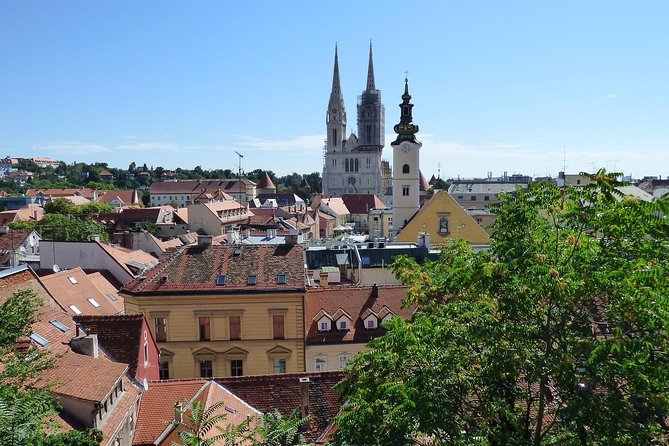
Reviewed · WALKING TOURS
Zagreb Highlights: Private Walking Tour with Local Guide
Zagreb is better on foot. This private walking tour strings together the city’s most recognizable landmarks with the kind of local street-level context that helps you get your bearings fast. I especially like the local guide approach and the stop at Dolac Market, because it connects architecture to daily life. One drawback to keep in mind is the tour is short, so each place gets a quick, high-impact pass rather than a deep museum-style visit.
You’ll spend about 1 hour 30 minutes to 2 hours walking a compact central route, and it’s offered in English with licensed guidance. The meeting point is the Ban Jelačić Statue in Ban Jelačić Square, and the tour ends back there too, which makes it easy to continue on your own. Pickup is offered, there’s a mobile ticket, and it’s set up as private time for just your group.
One thing I really value is how the route balances big monuments and everyday streets. In the positive feedback, guide Kristine gets praise for being well prepared and adding humor, which makes the history easier to remember. Also, many stops list admission as free for the time you’re there, so you can focus on walking and learning instead of planning separate ticket buys.
In This Review
- Key highlights you will feel right away
- Ban Jelačić Square start: instant Zagreb orientation
- Cathedral of Zagreb and Dolac Market: architecture plus real-life food culture
- Tkalčićeva Street: where Zagreb’s everyday shopping and café life shows up
- Kamenita vrata (Stone Gate) and St Mark’s Square: Gradec history in two tight hits
- St. Catherine’s Church and Strossmayer Promenade: Baroque contrast then calm views
- Lotrščak Tower and the funicular idea: history plus a practical transit story
- Ilica street and the walk back to the main square finish
- Price and value for a private 1.5 to 2 hour Zagreb highlight route
- The guide factor: humor and clarity make the history stick
- A realistic drawback: it is a highlight walk, not a deep dive
- Who this Zagreb Highlights private tour fits best
- Should you book it? My straight answer
- FAQ
- How long is the Zagreb highlights private walking tour?
- How much does the tour cost?
- Is this tour private?
- What language is the tour offered in?
- Where do we meet, and where does the tour end?
- Is pickup available?
- Are admission tickets included for the stops?
- Is there a mobile ticket?
- Can most travelers participate?
- What is the cancellation policy?
Key highlights you will feel right away
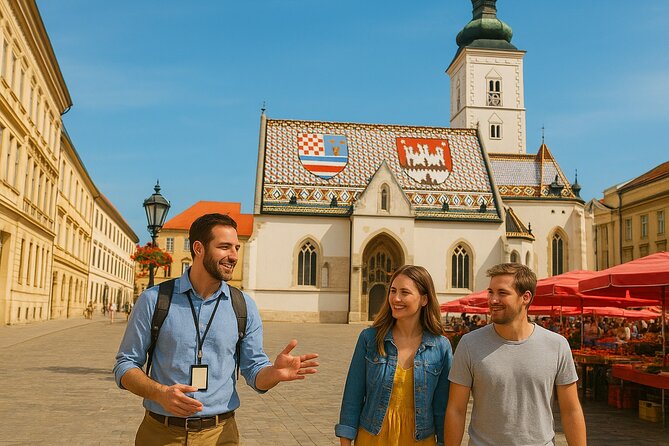
- Cathedral of Zagreb (Neo-Gothic symbol): a major visual anchor that helps you orient quickly
- Dolac Market stop: a food-market landmark tied to 80 years of local shopping
- Tkalčićeva Street stroll: a quick look at everyday Zagreb, with shops and cafés along the way
- Kamenita vrata (Stone Gate): Gradec’s eastern medieval gate and an important oath site
- Strossmayer Promenade views: calmer pause with panoramic angles on the city
- Lotrščak Tower plus the funicular context: 13th-century fortification and 1888 transport history in one spot
Ban Jelačić Square start: instant Zagreb orientation
Your tour kicks off at the Ban Jelačić Statue on Trg bana Josipa Jelačića. I like this, because it is the kind of central point where you can easily reset if you are arriving from elsewhere, and it keeps the route feeling logical instead of random.
From the first steps, you are working with a simple goal: understand how central Zagreb is arranged. You move between recognizable squares, then up to Gradec-era details, then back toward modern street life. That structure matters because Zagreb’s Upper and Lower Town areas can feel confusing at first, even if you know the map.
This is also a private tour, meaning you can ask follow-ups without waiting for a group. If you want more time at a street corner photo moment, or you want to know which direction to head next after the tour, this setup generally makes it easier to tailor the experience to what you care about.
Cathedral of Zagreb and Dolac Market: architecture plus real-life food culture
The first big stop is the Cathedral of Zagreb. It is one of the city’s most famous symbols and a monumental Neo-Gothic sacral building southeast of the Alps. Even if you do not go inside for a long time, just seeing the scale from the street gives you a strong visual reference for the rest of the walk.
Right after that, you shift to a completely different vibe at Dolac Market. This is Zagreb’s most visited farmers market, and it is the place where locals have been buying food for the past 80 years. I love how this stop changes your frame from landmark tourism to daily routines. Markets teach you what locals value: fresh produce rhythms, what people carry home, and how the city eats.
Dolac is short on the schedule, but it is plenty to get a sense of how the market functions and why it matters. If you are thinking about lunch later, you will leave with clearer ideas about where Zagreb’s food culture actually lives, not just what you read in a guidebook.
One practical note: markets and cathedrals can draw crowds depending on the day. This tour keeps the stop times tight, but if you are sensitive to crowds, plan for a bit of shoulder-to-shoulder movement around busy areas.
More Walking Tours in Zagreb
- Zagreb: City and WWII Tunnels Walking Tour★ 4.9 · 1,230 reviews
- Zagreb: City & History Walking Tour & WW2 Tunnels★ 4.9 · 1,202 reviews
- Walking tour of Zagreb★ 5.0 · 383 reviews
Tkalčićeva Street: where Zagreb’s everyday shopping and café life shows up
Next comes Tkalčićeva Street, described as the city’s most lively street, lined with small boutiques, traditional shops, restaurants, and cafés. This is the kind of stop that feels minor on paper, but it can be one of the most useful parts of the tour because it is the texture of the city.
On a walking tour, I like getting at least one moment that is not about a single monument. Here, you are scanning storefronts and learning what kind of streets Zagreb supports: quick visits, browsing, a casual stop for coffee, and a place to linger with locals.
The schedule keeps this to around 10 minutes, so treat it like a guided taste, not a full shopping spree. If you want to turn it into a longer break later, note the directions and take a second walk after the tour. You’ll likely find it easier to navigate once you have already had a guide point out what to look for.
If you prefer quiet historic streets over shops, you might wish there was more time for the Gradec-side details. Still, as an orientation piece, Tkalčićeva Street does a lot of work in a little time.
Kamenita vrata (Stone Gate) and St Mark’s Square: Gradec history in two tight hits
Then you reach Petrini Pyli, which is also called Kamenita vrata, or Stone Gate. This is the eastern gate to medieval Gradec Town and a significant oath site in Zagreb. The phrase “oath site” is the clue that this gate is more than a doorway. It is tied to rituals and civic meaning, which is exactly what helps you understand why certain corners matter.
The tour moves quickly, but you are not just looking at a wall. You are learning how medieval Zagreb protected and communicated identity, and how that spills into the layout you see today. Gates are perfect for this kind of guided explanation, because the setting is visible right there in front of you.
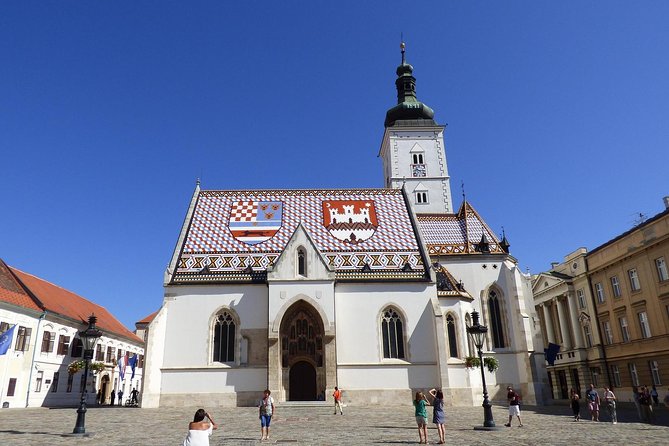
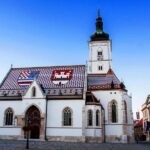
After the gate, you continue to St Mark’s Square. This once served as the center of medieval Zagreb, and now it is the center of Croatian government and parliament. St Mark’s Church, with its 13th-century look, is the recognizable feature that ties the past to the present.
I like that this pairing puts you in a “layered time” mindset. You see a medieval function (gate and oath meaning), then a medieval center that has evolved into modern civic life. It makes the city feel continuous rather than like separate highlights taped together.
Expect this segment to be visually dense. If you like photos, this is a good stretch to slow down for a couple of pictures. Just keep one eye on where your guide is moving next, because the tour is paced to keep it within the 1.5 to 2 hour window.
St. Catherine’s Church and Strossmayer Promenade: Baroque contrast then calm views
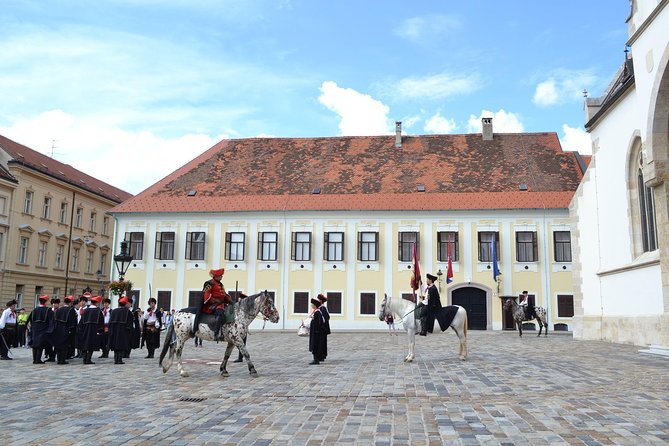
St. Catherine’s Church is a Baroque church built by Jesuits in the 17th century. This stop is a nice contrast after the medieval-feeling gate and square. Baroque churches can feel like drama in stone and detail, and a quick guided stop helps you notice what makes Baroque different from Neo-Gothic or medieval styles.
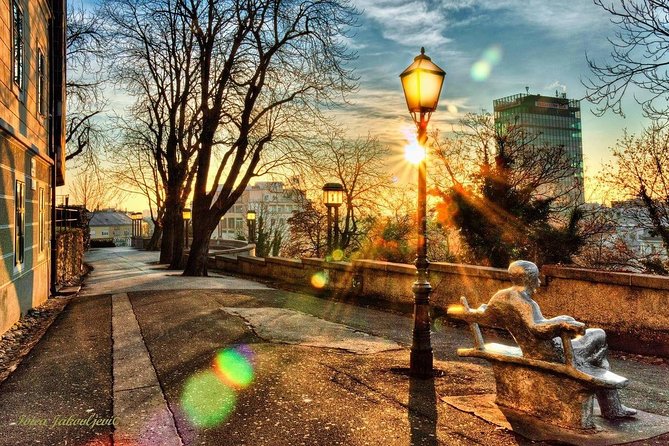
Then you shift gears again, to Strossmayer Promenade. This is described as peaceful and harmonious, hidden from the busier life of Zagreb, and the best place for panoramic views of the city. This is the break your legs appreciate and the kind of view that makes a walking tour feel worth it.
When a tour includes a viewpoint stop like this, it is not just for photos. It helps you see the city in three dimensions, and it makes the earlier landmarks easier to place in your mental map. After a quick sweep through historic corners and streets, you get a chance to step back and understand how everything connects.
If the weather is clear, you will likely enjoy lingering for those panoramic angles. If it is rainy or windy, this is still a valuable stop, but keep movement efficient and bring a jacket if needed.
More marble lanes taken slowly:
- Zagreb Small Group Guided Walking Tour with WW2 Tunnels
★ 5.0 · 380 reviews - Zagreb: Restaurants, Food & Old Town Walking Tour
★ 5.0 · 191 reviews - Zagreb Unveiled: Private walking tour with a local guide
★ 5.0 · 185 reviews - Zagreb: Restaurants, Food & Old Town Walking Tour
★ 4.7 · 170 reviews
Lotrščak Tower and the funicular idea: history plus a practical transit story
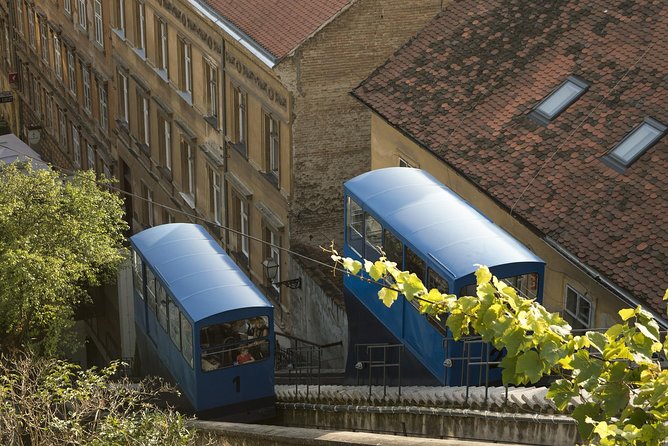
Lotrščak Tower dates to the 13th century and was built to guard the southern gate of medieval Gradec. Across the street, you see the funicular railway constructed in 1888, which connects the Lower and Upper Town.
I love this combo because it links two kinds of “movement” through time. First you have a defensive tower meant to control access. Then you have a later transportation system that helps people move up and down more easily. It is a simple way to understand how the city changed from guarding territory to supporting everyday life.
The tour keeps the stop time to about 10 minutes, so think of it as your guided cue for what you should pay attention to if you return later. Look at how the street layout leads you toward the funicular location, and remember that the tower is part of a longer story of gateways and approach routes.
This is a great segment for a couple of photos, especially if you angle shots to catch both the tower and the funicular context. Even with limited time, this stop tends to make the city feel real because you can connect what you learned about medieval protection to what you can still experience today.
Ilica street and the walk back to the main square finish
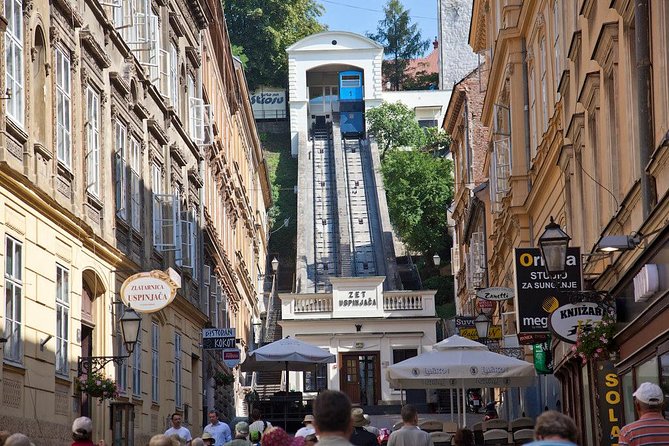
Ilica is one of the longest, busiest, and most popular shopping streets in Zagreb. This stop gives you one more slice of modern street life before you close the loop back at Ban Jelačić Square.
The schedule keeps it around 10 minutes. That is enough to understand the vibe: busy foot traffic, storefront rhythm, and the sense of a major commercial corridor. If shopping is not your thing, you can still use this as a navigation tool. Once you know where Ilica runs, it becomes easier to plan how you will move around town after the tour.
Finally, you finish back at Ban Jelačić Square, the center of Zagreb’s social life. This is a strong ending point because it is simple to decide what to do next: keep walking, grab a meal nearby, or branch out to another neighborhood. Ending where you started also makes the logistics feel stress-free. You are not left wondering how to get back to your hotel.
Price and value for a private 1.5 to 2 hour Zagreb highlight route
The price is $72.25 per person for a private walking tour lasting about 1 hour 30 minutes to 2 hours. That sounds like a “short tour” price, but here is why it can still feel like good value.
First, you are paying for a licensed local guide. Second, you get a compact route that hits major places in a short time, including Cathedral of Zagreb, Dolac Market, Gradec-area highlights like Kamenita vrata and St Mark’s Square, and a panoramic viewpoint at Strossmayer Promenade. Third, the stops listed for the time you visit show admission as free, which reduces the expense creep that can happen with tours that mix paid attractions with walking.
Pickup is offered, and there are group discounts available. If you are traveling with a friend or two, this can help bring the per-person value closer to what you would spend on a standard group tour, while keeping the benefits of privacy.
One more detail worth noting: this tour is often booked about 24 days in advance on average. That suggests steady demand, which usually aligns with tours that make practical sense for first-time visitors.
The guide factor: humor and clarity make the history stick
The strongest praise in the feedback is about the guide experience. One review specifically calls out Kristine for being well prepared and enjoying her commentary and humor. That combination is not just nice. It changes how fast you remember what you learned, because you are not drowning in facts. Instead, the story is easier to follow and more likely to stick after you leave the street corner.
In a tour like this, the guide’s style matters because you are hitting several different “types” of places: a cathedral symbol, a major market with decades of local routine, civic squares, a medieval gate, a Baroque church, and a viewpoint. When someone can connect those pieces, the city stops feeling like a checklist.
I also appreciate that this tour is set up for English speakers and is private to your group. You are not stuck listening to explanations for topics you do not care about. You can steer your attention toward the parts that interest you most, whether that is street life, architecture, or the story behind gates and squares.
A realistic drawback: it is a highlight walk, not a deep dive
The main limitation is built into the format. You are walking a packed central route for only about 1 hour 30 minutes to 2 hours. That means you will not get long, slow time inside major sites, and you will likely not go far beyond the top highlights.
If your travel style is museum-focused or you like to spend 45 minutes in one interior, you might want to pair this with a longer independent visit later. If your goal is orientation and a local narrative, this tour matches it very well.
Also, it is a walking tour, and while “most travelers can participate,” you should still think like an adult with knees. Comfortable shoes matter, and you will feel the walk more on days when the weather is hot or wet.
Who this Zagreb Highlights private tour fits best
This works especially well for:
- First-time visitors who want a smart orientation route through central Zagreb
- Travelers who like a mix of monuments and everyday street life, like markets and major shopping streets
- People who want a private guide experience in English
- Small groups who want to keep the conversation moving without a large group schedule
If you already know Zagreb well and you are hunting for major museums or niche neighborhoods, you might feel the route is too focused on the core sights. But as a first or second day in town, it can save you time and confusion.
Should you book it? My straight answer
Yes, I think you should book this Zagreb Highlights private walking tour if you want a practical, guided route that explains what you are seeing in plain language. The combination of Cathedral of Zagreb, Dolac Market, Gradec-era landmarks like Kamenita vrata and St Mark’s Square, plus a viewpoint at Strossmayer Promenade makes it a strong “start here” option.
I would pass or consider alternatives if you crave long indoor time, deep museum investigation, or you want to cover neighborhoods well outside the central cluster. But for most visitors, the time-to-value ratio is hard to beat, especially with a private guide who adds humor and keeps you moving at a pace that still feels informative.
FAQ
How long is the Zagreb highlights private walking tour?
It lasts about 1 hour 30 minutes to 2 hours.
How much does the tour cost?
The price is $72.25 per person.
Is this tour private?
Yes. It is private, so only your group participates.
What language is the tour offered in?
The tour is offered in English.
Where do we meet, and where does the tour end?
You meet at the Ban Jelačić Statue on Trg bana Josipa Jelačića, and the tour ends back at Ban Jelačić Square on Trg bana Josipa Jelačića.
Is pickup available?
Pickup is offered.
Are admission tickets included for the stops?
The listed stops show admission ticket free for the time at those locations.
Is there a mobile ticket?
Yes, you get a mobile ticket.
Can most travelers participate?
Most travelers can participate, and service animals are allowed.
What is the cancellation policy?
You can cancel for a full refund up to 24 hours in advance. If you cancel less than 24 hours before the start time, the amount paid is not refunded.
Latest arrivals logged at Zagreb



Walking Tours, compared.
Walking Tour of Split and Diocletian’s Palace
Read our review →
Krka Waterfalls tour with Trogir Walking tour and Krka panoramic boat cruise
Read our review →
City Walls Early Morning or Sunset Walking Tour
Read our review →Browse the lists this tour appears in